Powerful inspirational message by Rev Akintola Oni preached at TREM Dagenham. A must watch!
Category: Christian Living
Serving God Acceptably by Pastor Yemi Adelaja
A beautiful Fathers Day message preached by Pastor Yemi Adelaja at TREM Dagenham.

How Much Do You Love Your Life? by Deacon Abiodun Adebisi
Key scripture
“Anyone who loves their life will lose it, while anyone who hates their life in this world will keep it for eternal life.” (John 12:25 NIV)
Introduction
‘Your time is up!’ That’s the final whistle that many dread, believers inclusive. One look at our “To-do list” and we’re quick to tell God, “Not yet, Lord.”
Hezekiah did just that when God sent Isaiah to tell him to get ready to die. He pleaded tearfully for extra time and God extended his life by 15 years. The account can be found in Isaiah 38:1-5:
“In those days was Hezekiah sick unto death. And Isaiah the prophet the son of Amoz came unto him, and said unto him, Thus saith the Lord, Set thine house in order: for thou shalt die, and not live.
Then Hezekiah turned his face toward the wall, and prayed unto the Lord,
And said, Remember now, O Lord, I beseech thee, how I have walked before thee in truth and with a perfect heart, and have done that which is good in thy sight. And Hezekiah wept sore. Then came the word of the Lord to Isaiah, saying,
Go, and say to Hezekiah, Thus saith the Lord, the God of David thy father, I have heard thy prayer, I have seen thy tears: behold, I will add unto thy days fifteen years.”
But not many are forewarned like Hezekiah, and maybe not everyone has a premonition of death. While the grace for extra time is still available, it is entirely at the discretion of the Almighty. Not even His friend Moses (Exodus 33:11) had that grace:
“And the Lord said unto him, This is the land which I sware unto Abraham, unto Isaac, and unto Jacob, saying, I will give it unto thy seed: I have caused thee to see it with thine eyes, but thou shalt not go over thither.
So Moses the servant of the Lord died there in the land of Moab, according to the word of the Lord” (Deuteronomy 34:4-5).
Someone might argue, “But Moses didn’t contest the verdict!” What if he did? Who wouldn’t want to get to their promised land, a land flowing with milk and honey? But perhaps he had been with the Lord long enough to know what verdicts to contest. Just as Eli received his sentence with resignation, knowing the evidence was overwhelming, “…It is the Lord: let him do what seemeth him good” (1Samuel 3:18).
However, that does not stop anyone from tapping into the extra time grace. God remains gracious and merciful. Even when you have pleaded guilty as charged as there is nothing hidden from the omniscient God to whom we must give account (Hebrews 4:13), Jesus, our Advocate would rise and plead your cause, saying, “Father, remember the cross.” And when sentence is passed, all you hear is, “Go, and sin no more!” Reuben heard such cheering proclamation, “Let Reuben live, and not die…” (Deut 33:6).
Events around us
The desperation to cling to life is illustrated by numerous tragic situations all around. The horrors of the 9/11 terrorist attacks on the World Trade Centre in New York in 2001 still give the world nightmares. The death toll was close to 3000. Let us also recall the sad event in Kenya where terrorists laid siege to the Nairobi shopping mall, with at least 65 confirmed dead and about 200 injured during the 80-hour siege which started Saturday afternoon, September 21, 2013.
Video clips of both tragedies beamed all over the world show panic-stricken victims running helter-skelter for dear lives. That’s the law of self-preservation at work. This law is all about keeping oneself from danger or injury, especially as a basic instinct. It’s the innate desire to stay alive. It’s even reported that some trampled on helpless children in order to make good their escape in Nairobi with someone who witnessed the horror describing such people as “animals”. That’s the extent to which people will go to preserve their own lives. The two disasters highlight man’s inhumanity to man. No wonder it grieved God he had created man: “And God saw that the wickedness of man was great in the earth, and that every imagination of the thoughts of his heart was only evil continually” (Gen 6:5). The heroism of a few who risked their lives to save others in both tragedies must however be acknowledged.
Someone might be too quick to judge and ask, “What were the victims of the Nairobi siege doing at the mall? Why were they trooping to the shopping mall rather than the house of God?” Now, here’s what happened to those in the house of God. While the Kenyan mall massacre was going on, Christians coming out from a church service in Pakistan were being similarly brutally massacred on Sunday September 23, 2013. The death toll was put at 81. Almost immediately after the church massacre, Pakistan experienced another disaster, this time an earthquake the following day which was reported to have claimed more than 800 lives. The elements have not spared even the most technologically advanced, with floods claiming casualties in the United Kingdom and the United States.
The out-of-control gun crime in the United States, especially the loss of numerous young lives in mass shootings at schools, brought tears to President Barak Obama’s eyes in January 2016. That same month in Canada, a teenager went on a shooting spree in a school, killing four and wounding many. Everyone scampered for safety. Cult wars on and off campus among students in Nigeria and elsewhere are not without fatalities. When students are constantly looking over their shoulders, how can they focus on their education? And that is what everyone around the world seems to be doing now – watching over their shoulders!
Boko Haram terrorists have been laying siege to places of worship in Nigeria and several Christians have thereby lost their lives, even though Muslims are also sometimes targeted. The high point of the atrocities of the terrorist group was the mass abduction of more than 200 female students of the Government Secondary School in Chibok, Borno State, on the night of April 14-15, 2014. Some of the girls were said to have jumped off moving trucks in a desperate bid to save their lives and protect their dignity. Previously the terrorists had launched bombing attacks on the United Nations compound in Abuja as well as the police headquarters also in the federal capital.
On a wider scale, it’s as if the world is on the throes of terror and the hydra-headed vermin is proving difficult to exterminate. Beyond terror, disasters are known to have occurred on land, sea and air across the globe, with casualties cutting across the rich and the poor, the atheists and ministers of God.
Now, did any of the victims of the horrors highlighted above call on God? I bet some did. And why did they die? Because their time was up and the extra time grace did not cover them. Were they worse sinners than the rest of us who are privileged to be alive? Not necessarily.
Yet it is God that rules over the affairs of men (Daniel 4:17). Two quick lessons Job learnt from his affliction which will benefit us. First, the power of the Almighty over the elements:
“If he holds back the waters, there is drought;
if he lets them loose, they devastate the land” (Job 12:15).
Second, His sole prerogative to determine man’s expiry date:
“…a man’s days are already determined, and the number of his months is wholly in Your control, and he cannot pass the bounds of his allotted time” (Job 14:5 AMP).
The inevitability of death
The basic truth is that death is inevitable. Its inevitability is laid bare in Hebrews 9:27:
“And as it is appointed unto men once to die, but after this the judgment.”
But who wants to keep their appointment? Everyone, it seems, wants to “pass the bounds of his allotted time.”
Shakespeare corroborates the inevitability of death, describing the fear of death as an act of cowardice:
“Cowards die many times before their deaths.
The valiant never taste of death but once.
Of all the wonders that I yet have heard,
It seems to me most strange that men should fear,
Seeing that death, a necessary end,
Will come when it will come.”
(William Shakespeare, Julius Caesar, Act 2 Scene 2).
If you appreciate that your breath of life is in your nostrils (Isaiah 2:22 NASB), you will stop acting like the rich fool:
“And he spake a parable unto them, saying, The ground of a certain rich man brought forth plentifully:
And he thought within himself, saying, What shall I do, because I have no room where to bestow my fruits?
And he said, This will I do: I will pull down my barns, and build greater; and there will I bestow all my fruits and my goods.
And I will say to my soul, Soul, thou hast much goods laid up for many years; take thine ease, eat, drink, and be merry.
But God said unto him, Thou fool, this night thy soul shall be required of thee: then whose shall those things be, which thou hast provided?”
(Luke 12:16-20)
If death is inevitable as long as the Lord tarries, why can’t we all brace ourselves for it so that when it comes calling, we would be able to declare boldly just as Apostle Paul did:
“For to me, to live is Christ and to die is gain.
If I am to go on living in the body, this will mean fruitful labor for me.
Yet what shall I choose? I do not know!
I am torn between the two: I desire to depart and be with Christ, which is better by far;
but it is more necessary for you that I remain in the body” (Philippians 1:21-24 NIV).
Paul’s life-or-death dilemma was more because he felt almost equally at home with both options. Clinging on to life when his time was up was not a matter of life and death. He was confident that head or tail he couldn’t lose. Little wonder he was able to declare at the end of his race, “I have fought a good fight, I have finished my course, I have kept the faith”
(2 Timothy 4:7). Every believer should aspire to this level of confidence and spiritual growth in their walk with God.
How much do you love your life?
There’s a caption I find fascinating: “Don’t take life seriously; you won’t get out of it alive!” Ecclesiastes 12:7-8 says pretty much the same thing, though not in those exact words:
“Then shall the dust return to the earth as it was: and the spirit shall return unto God who gave it.
Vanity of vanities, saith the preacher; all is vanity.”
The final whistle always comes eventually, with or without extra time! The most important thing is to ensure our names are written in the book of life by accepting Christ before we take our exit from this world so that we will not die the second death:
“And death and hell were cast into the lake of fire. This is the second death.
And whosoever was not found written in the book of life was cast into the lake of fire”
(Revelation 20:14-15).
Any time death is mentioned, that’s when these confessions begin to ring out loud:
“With long life will God satisfy me” (Psalm 91:16);
“I shall live to declare the works of the Lord” (Psalm 118:17);
“No weapon formed against me shall prosper” (Isaiah 54:17);
“The minimum life span God has promised me is 70 and I will even live much longer” (Psalm 90:10 NIV).
True, we have a covenant of long life, but eternal life is a superior covenant. The reality is that it is possible, in fact better, to die at 70, even earlier, and make heaven than live to be a hundred and rot in hell afterwards.
The bottom line is to make heaven. Eternity is the goal. We must remember that when the Lord Jesus promised believers abundant life, his primary concern was eternal life (John 10:10; Mark 8:36). A traveller should not enjoy the journey so much as to lose sight of their destination. Life on earth is only a means to eternal life. The means should therefore not be allowed to obstruct the end. That is the essence of our Lord’s admonition:
“Anyone who loves their life will lose it, while anyone who hates their life in this world will keep it for eternal life” (John 12:25 NIV).
Did Jesus mean for his followers to take this literally? Yes, of course he did. However, the body language of modern day believers seems to suggest that he didn’t. Each time the scripture pops up, ““If we suffer, we shall also reign with him: if we deny him, he also will deny us”
2 Timothy 2:12), they would rather the suffering bit was left out! But the apostles of old took him at his word. Why? Because he had proved it by laying down his own life. That’s why he didn’t save himself from those who crucified him (John 19). The scripture says Jesus, “for the joy that was set before him endured the cross, despising the shame” (Hebrews 12:2). And obviously that’s why he didn’t do anything about John the Baptist’s beheading (Matthew 14:1-13). He could have forestalled both, but he didn’t. Apparently he was already looking beyond the deaths and seeing eternity, and, in His own case, the fulfilment of His all-important mission to reconcile man to God. What the scripture tells me is, “Surely the arm of the LORD is not too short to save…” (Isaiah 59:1).
Sometimes the flesh kicks in and we feel like taking God to task, armed with The Universal Declaration of Human Rights by the UN. We pull out Article 3 which states that “Everyone has the right to life, liberty and security of person” and Article 5 which says, “No one shall be subjected to torture or to cruel, inhuman or degrading treatment or punishment.” Why would Jesus literally turn a blind eye to the execution of John the Baptist? Why would the Father literally look the other way when the Son was being crucified? God is not answerable to man, but if we care to look, His response lies in His word:
“For my thoughts are not your thoughts, neither are your ways my ways, saith the Lord.
For as the heavens are higher than the earth, so are my ways higher than your ways, and my thoughts than your thoughts.” (Isaiah 55:8-9 KJV)
Even as the Master sent the apostles to go into the world and preach the gospel to all creation (Mark 16:15), he knew what awaited them:
“Therefore I am sending you prophets and sages and teachers. Some of them you will kill and crucify; others you will flog in your synagogues and pursue from town to town.” (Matt 23:34 NIV).
Just as he had forewarned, here’s what befell them (apart from Judas who hanged himself, having betrayed Jesus):
James the son of Zebedee – executed by Herod about 44 AD (Acts 12:2).
Paul – beheaded, martyred in Rome about 66 AD during the persecution under Emperor Nero. Peter – crucified, upside down at his request, since he did not feel he was worthy to die in the same manner as his Lord; also martyred in Rome about 66 AD during the persecution under Emperor Nero.
Andrew – crucified in Greece, having preached there as well as in Asia Minor, modern Turkey and the land now called Soviet Union.
Thomas – died east of India, pierced through with spears by four soldiers.
Philip – arrested and cruelly put to death in Asia Minor on the orders of a angry Roman proconsul whose wife he had converted; earlier ministered in Carthage in North Africa.
Matthew – believed to have been martyred or stabbed to death in Ethiopia, also ministered in Persia; writer of a Gospel.
Bartholomew – martyred for the gospel; missionary travels took him to India, Armenia, Ethiopia and Southern Arabia.
James the son of Alpheus – reportedly stoned and clubbed to death, ministered in Syria.
Simon the zealot – killed after refusing to sacrifice to the sun god, ministered in Persia.
Matthias (the apostle who replaced Judas) – burned to death, ministered in Syria.
John the Apostle – the only one thought to have died a natural death, having escaped unhurt after being cast into boiling oil at Rome; was leader of the church in the Ephesus area, exiled to island of Patmos, credited with writing the last book of the New Testament, Revelation.
(Source: Ken Curtis, ‘Whatever Happened to the Twelve Apostles?’ – Christianity.com).
That tells me it’s not the manner of death that determines where you end up. It is possible to be “cruelly put to death” or die in a crash or get washed off by the elements and make heaven while someone might die in their sleep and head straight to hell. Confessing Jesus as Lord and holding on to your faith in Him before you take your exit is what guarantees heaven.
The commitment of the apostles to the faith in the face of death is extraordinary. And one major characteristic of overcomers, according to scriptures, is, “…they loved not their lives unto the death” (Rev 12:11). The NIV puts this simply, “…they did not love their lives so much as to shrink from death.” The apostles of old certainly did not shrink from death.
Over to you. So, how much do you love your life? Loads, no doubt. But perhaps the more pertinent question is, How much should you love your life? Not a lot, when eternity is at stake.
Deacon Abiodun Adebisi
Deacon Abiodun Adebisi, a National Officer with The Redeemed Evangelical Mission (TREM) writes from the United Kingdom.
The Real Battle by Deaconess Yemi Adesanya
There are always battles going on between the facts that we see, and the things that we dont see. In a teaching titled ‘The Real Battle’, Deaconess Yemi Adesanya explains that the facts always try to counter God’s word but we must realise that God is not limited by the facts that we place before Him.

Is Wheat Bad For Your Health? by Funke Fasanya
What is all this ado about whole wheat being dangerous and in fact bad? I thought whole wheat classifies as whole grain/fibre which is good for gut health? So why am I hearing rumours and postulations about whole wheat having been blacklisted as ‘dangerous’ food? In fact the other day someone posted a loooong article on a whatsapp group portal warning people to steer clear of whole wheat which the writer said ‘is killing people in their millions’. Wow! Really? Any particular statistical data to back that up or did someone just cook that up? Is it not becoming exacerbating that there appears to be a global conspiracy to oust everything that humans have called and used for food!! Arrrrrgh!!
So much out there for and against whole wheat and whole grains but then I chose to find out for myself and here are my findings:
A Whole Grain is defined as the cereal grain that contains the germ, endosperm and bran. In other words any cereal grain that still has its original (natural) make up of germ, endosperm and bran qualifies as a whole grain. Whereas refined grains are made up of cereal grains that have been mechanically processed. The processing modifies the nature of the grain such that the bran and germ are removed and only the endosperm is retained. Processed or refined grains are classified as lower quality grains as against ‘whole grains’ because they are of lower nutritional value. I’ll tell you why.
The three components of whole grains have different nutritional values. The Bran contains fiber, antioxidants, B vitamins, phytochemicals, and 50-80% of the minerals in grains like iron, copper, zinc, and magnesium. The Germ contains healthy fats, B vitamins, phytochemicals, and antioxidants like vitamin E whilst the Endosperm is made up and contains more of carbohydrates, protein, and small amounts of some B vitamins and minerals.
So when you choose processed grains you are leaving out antioxidants, B vitamins, phytochemicals, and 50-80% of the minerals in grains like iron, copper, zinc, magnesium, healthy fats, B vitamins, phytochemicals, and antioxidants like vitamin E. Processed grains only offer carbohydrates, protein, and small amounts of some B vitamins and minerals. No wonder whole grains are always a better and higher quality choice of grain consumption. Phytochemicals help fight disease and can protect the body from diseases like cardiovascular (heart) disease, diabetes and cancer.
Here are some of the refined grains that find their ways into our daily food intake: White flour products like White bread, White sandwich rolls and buns, Cornbread, couscous, White Flour Tortillas, Noodles, Spaghetti, Macaroni, Crackers, White rice.
And here are some whole grain foods: Oats, Oat bread, Oat cereal, Oat meal, Rolled Oats, Popcorn, Brown rice, Barley, Muesli, Millet, Quinoa, Rye, Sorghum, Wild Rice, Whole Wheat products like whole wheat bread, whole wheat pasta, whole wheat tortillas, whole wheat couscous, whole wheat cereals.
We can clearly now declare that refined wheat or any refined grain are lower in nutritional value as they do not contain most of the vital nutrients the body needs to stay healthy and some of them actually contain added sugar and other chemical additives that could be dangerous to health. Question now is, if whole wheat and whole wheat products fall within the whole grain range why are some people advocating that wheat whether whole or refined is bad for health?
Here’s the thing: Unrefined or whole wheat as a grain is very nutritious but wheat either refined or whole contains and is quite high in ‘gluten’ which is a binding (elastic) substance. Gluten is a mixture of 2 proteins ‘gliadin’ and ‘glutenin’ and which may cause digestive problems as they are difficult for some people’s stomach to break down and can cause inflammation. Some people’s digestive systems cannot tolerate gluten especially people who have known Gastro Intestinal problems like Celiac Disease.
There is also a lot of information on studies done to prove that a high consumption of gluten can create digestive disorders in people who never had them. My take on this is, rather than classify any food as not good for you, find out how your body reacts to different foods by keeping a food diary; try to take note of the particular food that appears to always cause you discomfort each time you eat it, try to avoid that particular food and find a replacement for it which your body tolerates.
Our bodies respond differently and individually to food and environmental conditions. If you suspect that any particular food may be causing you discomfort in any way no matter how small, seek professional help before this develops into a more serious health problem; it is better safe than sorry.
Wheat allergy is the immune system responding negatively to the protein in wheat. Here are some of the symptoms associated with wheat and or gluten allergy: Gastro Intestinal Disturbances, Infections, Fatigue, Bloating, Asthma, Eczema, Acne, Migraine, Joint pains and many more. If you feel that you might be allergic to wheat then find other alternatives and seek help from a professional.
There is a lot being done presently by Food Regulatory bodies in the developed world (and some developing countries) to ensure sincerity, openness and accuracy in food labelling so as to assist consumers in making informed choices when purchasing. So another tip is: ‘check the pack’; read the nutritional information before buying.
Till I come your way again, I do hope and pray the manufacturers of your chosen ‘whole grain(s)’ have put the right information on the pack that we pick. Ciao!
Funke Fasanya
Funke Fasanya, an authority on healthy living writes from the United Kingdom.
A Christmas Message by Deaconess Yemi Adesanya
In this insightful teaching, Deaconess Yemi Adesanya delivers the message of Christmas at TREM Dagenham.
Christmas Carol Evening at TREM Dagenham
An evening of lovely Christmas Carols with TREM Dagenham.
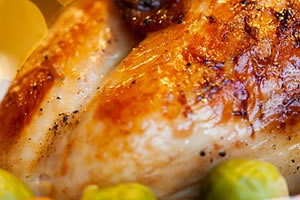
Does it Matter if I Eat Late at Night? by Funke Fasanya
I am back and wishing you a Merry Christmas and a Happy and prosperous 2016. I can guess you indulged in all the different ‘sorts’ like I did over the Christmas holidays and with a few more days of rollicking and celebrating the end of one year and the birth of another, we all would be busy with more ‘sorts’ like cakes, ice-cream, chocolates and lots of other varieties to eat and drink from morning till night and overnight.
So here’s the balance: A little indulgence now and again does not get you into too much trouble but a constant habit of consuming processed foods and drinks (which tend to be high in sugar and salt) is definitely going to have a negative effect on your health.
The other day, I let you into what my ‘former’ typical daily food plan (or lack of it) looked like. Part of that if you remember was that with a very busy work schedule it seemed difficult to get a meal during the day and so the tendency to compensate with a large meal at night. So what is it (really) with eating late at night, any problems, who is complaining? Does it matter if I eat late at night?
I found out and it turns out that it does not matter what time of the day you eat, you will most definitely put on weight if you eat larger portions and take in more than your fair share of calories per day. Does that now indicate a freedom of ‘fooding’ all night? Most people who eat only one meal a day (at night) tend to eat larger portions because of the psychological belief that they have missed out on their fair share of good food for the day. On the other hand a constant habit of overeating will most definitely lead to excessive weight gain which in turn can cause a lot of health risks.
Here are some overweight related health problems: Coronary Heart Disease where excess body mass causes a build of up waxy substance that the doctors say clogs up the arteries disturbing the supply of blood to the heart. It can also cause heart failure when the heart is unable to pump enough blood round the body. Other health risks are Osteoarthritis (stiffness and pain in body joints like the wrists, knees, hips, ankles making it difficult for you to move that joint or perform certain activities), High Blood Pressure, Type 2 Diabetes and some types of cancers. I actually have friends who had to lose a bit of weight to successfully deal with joint pains and there are lots of records out there of different people who were already experiencing symptoms of some weight-related health problems whose symptoms vanished after they heeded the advice to lose some weight.
Apart from the tendency to overeat there are other likely problems with eating late at night. Eating shortly before going to bed can cause acid reflux and heartburn. Our stomachs produce acid to help in breaking down the foods that we eat and food normally stays in the stomach from between 2-4 hours depending on the individual, the quantity of food and the type of food eaten. Foods that are high in protein and fat take a longer time to digest than most other foods and some people produce more acid than others.
The acid produced in the stomach can come back up the oesophagus causing acid reflux which could also be present with or without heartburn but with other symptoms like hoarseness, chronic throat clearing, post-nasal dripping and even asthma. A little lifestyle change may be necessary to avoid any of these symptoms; instead of eating dinner and going to bed immediately, choose to eat your last meal for the day at least two to three hours before bed time and select smaller portions of easier to digest food.
Okay, so I am getting a lot smarter with my eating habits now and this is what my new meal plan for the day looks like: I have decided to eat a meal or snack every 3 to 4 hours with a combo of high quality protein and fiber at every meal or snack. Now don’t get carried away with my choice of the word snack which to an average mind means a helping of a pack of over-salted crisps, a few biscuits or a slice of cake all topped with carbonated drinks. When I say snack, I mean a healthy snack like Tuna or Mackerel sandwich made with brown bread slices and some green and purple vegetables.
A good mix of protein and fibre gives me the needed daily portion of food nutrients. Here are some of the food items that make my list for protein: Chicken, Turkey, Guinea Fowl, Oily and other types of Fish and Sea Foods, Beans, Nuts, Eggs, Cottage Cheese, and Semi-skimmed Milk. For fibre: Fruits and vegetables, Beans, Lentils, Chickpeas, Brown Rice, Brown Pasta, Oats, Potatoes eaten with the skin.
The next time you see me I should have dumped all the ‘additionals’ gained from all the ‘sorts’ over this festive season. Until I return with the story of ‘Whole wheat’ for and against, I am going to try my hands on some healthy snack. Bye for now!
Funke Fasanya
Funke Fasanya, an authority on healthy living writes from the United Kingdom.
Rev Sunkanmi Obisesan – There is Yet Another Lifting
Prophetic declarations by Rev Sunkanmi Obisesan at the End of Year Thanksgiving Service of TREM Dagenham on December 13, 2015.

Does it Matter? by Funke Fasanya
I like my fried beef and steak, especially the ones with interlocking torso meat, hmmm yummy! How about a bottle or can of chilled sprite to top it up and of course I cannot resist nicely baked Nigerian ‘Meat-Pie’ and sausage roll with crusty pastry! My day is made already! Just that I could do with some nicely baked Victoria cup-cakes and then a little bit more of my favourite chilled sprite. Oh I forgot (How could I?), some nicely fried puff-puff and sugared doughnuts would be nice to nibble at whilst I work as I am too busy to go and get a proper meal at lunchtime. Now we are getting there. Its 9pm and for my main meal after a long day at work (my only meal for the day—-same day), I will have a full plate of white rice with four large sized pieces of beef and top it up with my favorite bottle of sprite or better still a pack of ‘Juice’ from concentrate. There! You have it; my typical daily meal plan or should I say meal day!
I decided to take a second look at the contents of my ‘meal plan’ or typical ‘meal day’; Interlocking Torso Beef, grilled or fried, are you thinking what I’m thinking? RED Lights FLASHING!! Did I hear you think ‘Red Meat’? Or is anyone complaining about my choice of carbonated drinks, but what is wrong with Fruit Juice from concentrate? After all I only ate one meal for the day.
Now here’s the reality: Red meat contains a high level of saturated fat. Studies have shown that regular consumption of saturated fat raises the level of bad cholesterol in the blood that clogs up your arteries and increases the risk of heart disease which is a major cause of death in today’s world. So want to avoid a heart attack? Reduce your intake of red meat to less than once a week and choose the lean beef which contains lesser saturated fat. Oh No! Did you just say that? Yes I did but I’m not done yet.
Recent studies are also beginning to associate three extra servings of red meat per day to increased risk of ‘Type 2 Diabetes’. Researchers have also produced findings linking high consumption of Red meat especially processed red meat (e.g. Bacon, Sausages, and Salamis) to high risk of Colon Cancer; whilst more research is ongoing and pointing at high consumption of red meat as a major cause or encourager of different forms of cancer.
So in my new meal plan I have decided to totally avoid Red Meat. I have now replaced it with Chicken and Fish to meet my need for meat in my daily food intake.
So much about red meat and back to my earlier ‘typical meal day’; Puff-puff (fried dough mixed with yeast and lots of refined sugar), ‘Meat pie’ (minced beef baked in pastry), Sausage Roll (processed beef in pastry). These are all ‘delightable’ snacks made with white flour and our already ‘red flagged’ red meat, they are also high in salt and sugar.
Simply put, white flour is refined carbohydrate meaning it has been stripped of its original nutritious content leaving you with pure starch which the human body processes as pure sugar resulting in high blood sugar and then low. So a daily intake of all the above and other white flour products means you keep having sugar high and then low or here we go again, a health condition referred to as ‘Type 2 Diabetes’.
Now my typical meal appears to be going down the drain so what do I eat then? Replace white flour products with whole wheat products which still contain the natural fiber components that the body needs. Ok looks like I heard another whisper flagging ‘Gluten’. Some day very soon, we will talk about choice between White flour (refined wheat), Whole-Wheat and wheat products, and alternative grains. For now let me just cling to the ‘healthy’ bit of my typical daily meal plan, Yes!….My full pack of fruit juice from concentrate.
This is a dicey one now; all fruits contain sugar. What???? Yes you read and heard me right. To fill a small glass with orange juice you would have to juice several oranges and in getting the juice you dispose of the fibre content which is the balance in fruit intake. American researchers are already coming up with live studies to show that some children who were found to have been taking 3 to 5 glasses of fruit juice per day had high blood sugar and were obese
Fruit juices from concentrate means the fruit juice was squeezed, the water extracted to produce a concentrated (or frozen) form. The process of extracting the water automatically removes some of the nutritional value in the juice. Also some manufacturers of fruit juices (including the not from concentrates) are not sincere and nice enough to tell you that they have added other refined sugar components to their packs. So then skip the purchase of those packs of juice from or not from concentrate and make your own fruit juices at home. Also keep your consumption of fruit juices low and eat the whole fruit instead, it is healthier. (Topic for another day).
For now I better go and ‘re-plan’ my typical ‘Meal day’ See you soon.
Funke Fasanya
Funke Fasanya, an authority on healthy living writes from the United Kingdom.